

内容简介
宠物为人类带来了陪伴,但它们也时常需要我们的照顾和关爱。一位听众发来询问,想知道有哪些动词可以用来谈论我们和宠物之间的互动。本期节目中,主持人步理和 Neil 就借助身边的宠物来介绍怎么用英语表达 “带宠物出去遛弯”、“挠痒痒”、“抚摸” 等动作。
文字稿
(关于台词的备注: 请注意这不是广播节目的逐字稿件。本文稿可能没有体现录制、编辑过程中对节目做出的改变。)
Buli
大家好,欢迎收听 BBC 英语教学的 “你问我答” 节目。We are here to answer your questions about English language, culture and life. I'm Buli and Neil is here to help me answer a question about animals.
Neil
Hi, Buli. How are you?
Buli
I'm very well, thank you. So, let's hear the question.
Question
你好,我想知道有哪些单词可以用来描述跟宠物互动的动作?比如 “play with”、“stroke” 或者 “cuddle” 等等。
Neil
Lovely question! Do you have any pets, Buli?
Buli
I do have a cat and I miss her so much on a such a busy day at work. 本期节目中我们将要回答的问题和 “pets(宠物)” 有关。这位听众想知道有哪些动词可以用来描述我们和宠物之间的互动。Let's get started.
Neil
My best friend has a dog called Ralph. He's so cute and whenever I see him, I love to 'fuss' him with lots of cuddles and treats, if he's allowed.
Buli
Oh, how sweet. I like to 'fuss' my cat as well. She gets lots of cuddles too, but we don't give her treats because she doesn't like them. I think people do give their cats treats, though.
Neil
I know that if you have a dog, you have to 'walk' it every day. I guess you don’t 'walk' your cat?
Buli
I don't! But I do know someone that keeps ferrets, and they 'walk' them sometimes.
Neil
Wow! Interesting. I love when Ralph lies with his head on my legs and I give him a 'stroke'. He really loves a 'stroke' on the head and a 'tickle' on his tummy.
Buli
My cats loves that too. I 'scratch' her behind her ears, and she makes lots of purring sounds. People don't tend to 'train' their cats, but they do 'train' dogs, don't they?
Neil
Yes. My friend took Ralph to training, especially when he was a puppy. They 'trained' him to do things like sit, lie down and roll over, although he's still not very good at rolling over! That's more like a trick than something necessary, I think.
Buli
Hmm. Maybe I could teach my cat to roll over!
你正在收听的是 BBC 英语教学的 “你问我答” 节目。在刚才的对话中,我和 Neil 使用了不少描述跟宠物互动的动词,特别是跟猫和狗等常见的宠物互动时的动作。
首先,如果你对自己或他人的宠物特别有感情,喜欢抚摸、陪它们玩耍,就可以用 “fuss” 这个动词来描述自己的动作。“Fuss” 的意思是 “宠爱某物,对某物给予很多的爱意和关注。”
Neil
Owners 'walk' their dogs or take their dogs for a walk. Buli doesn't 'walk' his cat, but he knows someone who 'walks' their ferrets!
Buli
Trust me, my cat does not like to be 'walked'. 我们可以用动词 “walk” 来描述 “带宠物出去遛弯”,比如 “walk a dog” 的意思就是 “遛狗”。在出门遛猫、遛狗或者在家陪宠物玩耍时,人们还常常会 “give their pet a treat(给他们的宠物喂小零食)”。
Neil
We 'stroke' a pet, especially if they have fur. This is to move your hand gently over their fur repeatedly, usually on their back or head.
Buli
And we often 'scratch' a pet behind their ears, particularly cats and dogs. My cat loves this!
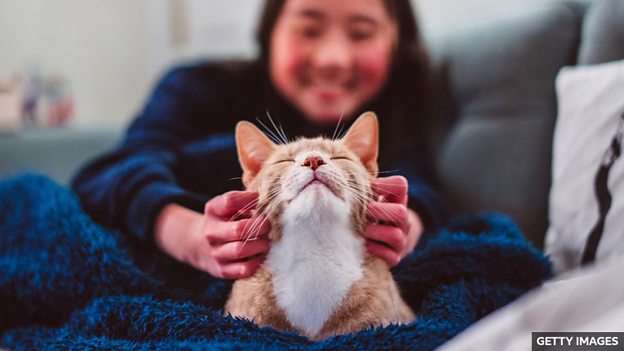
单词 “stroke” 和 “scratch” 分别描述两个触摸宠物的动作 “抚摸” 和 “抓挠”。在描述 “抚摸宠物的头部或后背” 时,我们用 “stroke”;而在描述 “用手指轻轻地挠耳朵或下巴等位置” 时,则通常使用 “scratch”。
Neil
And a 'tickle' on the tummy. Hmm, maybe I should get a cat…
Buli
Maybe you could! 最后,“tickle” 这个动词的意思是 “挠痒痒”,我们可以用这个词来表达 “给宠物的肚子挠痒痒”。
Neil
Remember, if you have a question that you'd like us to answer, you can email us too at: questions.chinaelt@bbc.co.uk
Buli
你还可以通过微博向我们提问。我们的微博账号是 “BBC英语教学”。Bye!
Neil
Goodbye!