

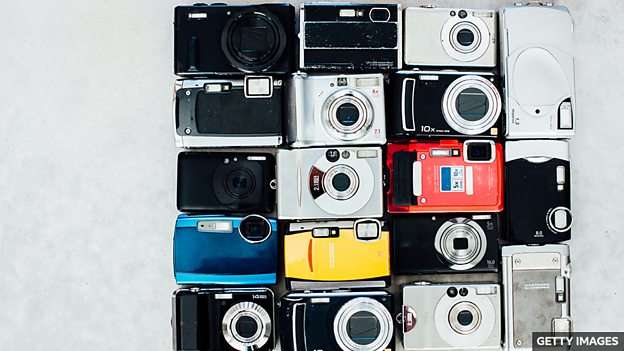
不少人发现,当他们想要回头寻找自己在数字相机时代早期拍摄的照片时,它们已经彻底找不到了。这些照片可能被存储在已经损坏的笔记本电脑中,或被上传到了早已不复存在的社交媒体网站上。我们怎样才能避免丢失我们宝贵的影像回忆?本文浅谈在数字时代有哪些保管照片的方法。
词汇:digital storage 数字存储
1 "Say cheese!" That's what the person behind the camera might shout when they want you to smile for a photo. 2025 marked the 50th anniversary of digital photography. Steve Sasson, inventor of the first digital camera in 1975, told the BBC that it looked like a 'toaster with a lens' – not like the stylish cameras we see today! By 2005, more people were buying digital cameras than film cameras, which meant that a process which used to be slow and laborious, was now quick and easy.
2 The 2000s brought a snap-happy era, with people now able to take hundreds, even thousands of photos a year. But what they hadn't quite worked out yet was how to store them. Back then, people used a mishmash of hard drives, USB sticks and CDs – physical storage that was at risk of loss or theft. Later came online photo sharing via social media or free online photo galleries where you can upload photos to 'the cloud'. The problem is that if you chose just one of these options for photo storage, such as an old laptop that's now broken, or a social media website that no longer exists, you may have what's called a 'black hole' in your photographic record, with no photos of life in the noughties. So, what's the advice?
3 After losing an external hard drive with all her family photos, Cathi Nelson set up The Photo Managers, a company which helps people manage their photo collections. They say the best protection is their '3-2-1' rule of photo storage which involves having three copies of each photo, all in different places. One in the cloud, the second on a hard drive, and a third on a drive in a separate location, like someone else's house. If that sounds like too much work, just make sure your smartphone automatically uploads photos to the cloud, and then spare some time once a month to upload those to a hard drive. And if you're someone who takes hundreds of photos per month, it's also a good idea to regularly curate your camera roll – keep the best ones and delete the rest, so you feel more in control.
4 The key takeaway here is that each storage method has its pitfalls, so it's better to always use two methods over just one in order to have a backup. Online platforms can be shut down, and hard drives can be lost. Just make sure your memories don't fade into the digital black hole.
测验与练习
一、将标题和段落配对。
Paragraph 1 _______
Paragraph 2 _______
Paragraph 3 _______
Paragraph 4 _______
a. How to protect our digital memories
b. Why backing up matters
c. Where did all our photos go?
d. How to take good photos
e. Keeping our old cameras in good condition
f. The rise of digital photography
二、根据文章内容选出正确的选项。
1. Steve Sasson thought the first digital camera looked elegant.
a. True
b. False
c. Not given
2. In the 2000s, people could easily take hundreds of photos, but what was the problem?
a. People ran out of storage on their external hard drives.
b. Taking photos was no longer special because it required no effort.
c. There wasn't an obvious system for easy and reliable storage.
3. The problem with external hard drives is that they can be lost.
a. True
b. False
c. Not given
4. What does 'that' refer to in the following sentence? If that sounds like too much work, just make sure your smartphone automatically uploads photos to the cloud, and then spare some time once a month to upload those to a hard drive.
a. The 3-2-1 rule.
b. Managing your photo collection.
c. Deleting the photos you don't want.
5. The overall message is that it's enough to back up your photos in an online cloud.
a. True
b. False
c. Not given
三、用下列单词完成对本文的总结。
Regularly updating your photo storage can be 1) _______ and boring. To keep it simple, make sure your smartphone has an automatic photo 2) _______. Then, once a month, transfer your photos to external storage, like a 3) _______. That way, you can continue to be 4) _______ and avoid a 5) _______ in your photographic record.
laborious
black hole
snap-happy
backup
curate
noughties
hard drive
(答案见词汇表后)
词汇表
say cheese (拍照时)说 “茄子”,让照相的人说 “cheese” 使口型呈微笑
lens 镜头
laborious 耗时费力的
snap-happy 热衷于拍照的
mishmash 大杂烩
hard drive 硬盘
USB stick U盘
the cloud 网络存储空间,云盘
black hole 黑洞
the noughties 21世纪的第一个十年
curate 精心挑选,整理
camera roll 手机相册
pitfall 隐患
backup 备份
答案
一、将标题和段落配对。
Paragraph 1 f) The rise of digital photography
Paragraph 2 c) Where did all our photos go?
Paragraph 3 a) How to protect our digital memories
Paragraph 4 b) Why backing up matters
二 、根据文章内容选出正确的选项。
1. b. False. Steve Sasson, inventor of the first digital camera in 1975, told the BBC that it looked like a 'toaster with a lens' – not like the stylish cameras we see today!
2. c. But what they hadn't quite worked out yet was how to store them.
3. a. True. Back then, people used a mishmash of hard drives, USB sticks and CDs – physical storage that was at risk of loss or theft.
4. a. 'That' refers to the 3-2-1 rule, which is described in the previous paragraph.
5. b. False. The key takeaway here is that each storage method has its pitfalls, so it's better to always use two methods over just one in order to have a backup.
三、用下列单词完成对本文的总结。
Regularly updating your photo storage can be laborious and boring. To keep it simple, make sure your smartphone has an automatic photo backup. Then, once a month, transfer your photos to external storage, like a hard drive. That way, you can continue to be snap-happy and avoid a black hole in your photographic record.