

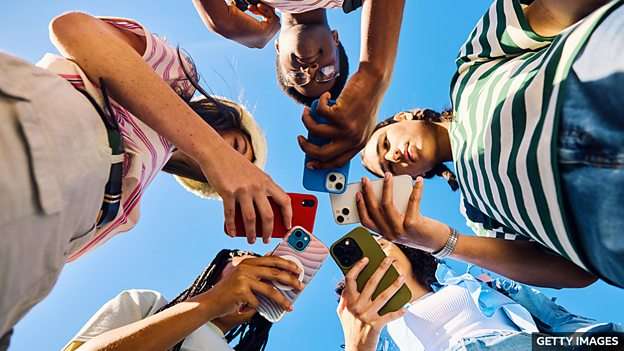
社交媒体最初旨在帮助人们保持联系,但随着越来越多的人被动地使用这些平台,每天花上数小时浏览信息流,社交媒体是否正在失去其 “社交性” 呢?
词汇:social media 社交媒体
1 For many people, social media is a normal part of everyday life. It's used to keep in touch, entertain and follow what's happening in the world. But numbers from DataReportal indicate that the average use of social media is around two hours 21 minutes a day. That's nearly 15 hours per week or about 32 days a year! The same report also mentions that people are using social media more passively. This means they're spending a lot of time scrolling on their feed, sending memes and reacting to things with emojis instead of sending messages. Could it be that social media platforms are negatively impacting the way we interact with people, and are they taking time away from us actually being social?
2 One study looked at what happened when social media was deliberately limited. In The effect of self-monitoring limited social media use on psychological well-being, researchers in the United States studied 230 university students. One group was asked to limit social media use to 30 minutes a day, while the other continued without a limit. After two weeks, the group limiting its use reported lower levels of loneliness, depression, anxiety and FOMO.
3 Sleep is another part of the picture. For many people, scrolling through social media has become part of their bedtime routine when they should be winding down to rest. Research published by the National Library of Medicine has examined the effects of blue light from electronic screens. This light can affect the body's natural sleep-wake cycle and increase alertness. Reducing screen time before bed may therefore help some people prepare for sleep. Better sleep can also provide more energy for work, hobbies and lay the groundwork for more successful and fulfilling face-to-face social interactions.
4 These findings do not necessarily mean that you have to completely quit social media. Instead, it may be worth considering how much time is being spent online, and what that time could be used for instead. Small changes might include moving the social media app away from the home screen, using social media only at certain times, or accessing it through a computer rather than the phone you probably have with you all the time. The idea is not to disconnect from the online world completely, but to create a better balance between online and offline life. Reducing the use of social media could free up time to take part in more rewarding hobbies and encourage you to connect with people in real life rather than through a screen.
测验与练习
一、为本文选择总结句。
a. Limiting social media use may have benefits for wellbeing and sleep.
b. Social media is harmful to everyone and should be completely avoided.
c. Social media is mainly useful for maintaining relationships.
二、根据文章内容选出正确的选项。
1. What point does the writer make by converting the daily social media figure into a weekly and yearly figure?
a. Even a small amount of daily use can add up to a substantial amount of time over a longer period.
b. Social media use has increased compared with previous years.
c. Most people spend approximately 15 hours of every week communicating with friends online.
2. What was the main difference between the two groups in the study?
a. One group monitored its psychological wellbeing, while the other monitored its social media use.
b. One group reduced its social media use to a specific daily limit, while the other was not given a limit.
c. One group stopped using social media completely, while the other continued using it for 30 minutes a day.
3. Reducing screen time before bed may help people prepare for sleep.
a. True
b. False
c. Not given
4. Which of the following is NOT suggested as a way of reducing social media use?
a. Limiting social media to particular times of the day.
b. Moving social media apps away from the phone's home screen.
c. Removing social media accounts from the phone altogether.
5. Reducing the time you spend on your phone could mean that you have more time for social media.
a. True
b. False
c. Not given
三、用下列单词完成对本文的总结。
A study found that when university students 1) _______ limited their social media use, they reported lower levels of loneliness, anxiety and 2) _______. Researchers also found that social media use before bed can affect the 3) _______ and increase 4) _______. In addition, reducing time on social media can 5) _______ more time for hobbies and real-life social interaction.
alertness
deliberately
indicate
free up
FOMO
passively
sleep-wake cycle
(答案见词汇表后)
词汇表
keep in touch 保持联系
indicate 表明,显示
passively 被动地
feed (社交媒体上的)信息流,动态
meme 网络梗;梗图
emoji 表情符号
deliberately 刻意地
self-monitoring 自我监控
FOMO 错失恐惧,错失焦虑(Fear Of Missing Out 的缩写)
part of the picture 整体情况的一部分;一个方面或因素
wind down (活动之后)放松下来,让身心平静下来
sleep-wake cycle 睡眠觉醒周期
alertness 清醒程度;警觉性
lay the groundwork 为…打下基础,为…做好准备
fulfilling 令人愉快满足的,有成就感的
face-to-face 面对面的
access 访问;使用
free up 腾出,空出
rewarding 有意义的;有成就感的
答案
一、 为本文选择总结句。
a. Limiting social media use may have benefits for wellbeing and sleep.
二、根据文章内容选出正确的选项。
1. a. But numbers from DataReportal indicate that the average use of social media is around two hours 21 minutes a day. That's nearly 15 hours per week or about 32 days a year!
2. b. One group was asked to limit social media use to 30 minutes a day, while the other continued without a limit.
3. a. True. This light can affect the body's natural sleep-wake cycle and increase alertness.
4. c. Small changes might include moving the social media app away from the home screen, using social media only at certain times, or accessing it through a computer rather than the phone you probably have with you all the time.
5. b. False. Reducing the use of social media could free up time to take part in more rewarding hobbies and encourage you to connect with people in real life rather than through a screen.
三、用下列单词完成对本文的总结。
A study found that when university students deliberately limited their social media use, they reported lower levels of loneliness, anxiety and FOMO Researchers also found that social media use before bed can affect the sleep-wake cycle and increase alertness. In addition, reducing time on social media can free up more time for hobbies and real-life social interaction.